The Missing Piece of Workplace Ergonomics
Integrated storage brings movement, organization, and good design together in one hardworking workstation.
Chairs and height-adjustable desks tend to lead the ergonomics conversation.
They should. Movement matters.
But a workstation also needs to support the hundreds of small tasks that fill the rest of the day.
That is where storage comes in.
Ergonomics Is More Than Movement
A height-adjustable desk supports comfort and movement. But if people still have to dig for supplies or work around clutter, the workstation is not doing enough.
Ergonomics is also about access. Keeping frequently used items close means less reaching, searching, and shuffling—and more focus.
Research from the Princeton Neuroscience Institute found that physical clutter competes for attention, making it harder for the brain to focus and process information effectively.¹
Less clutter. Better focus.
Yet storage is still easy to overlook when planning a workstation.
The Workplace Friction Nobody Talks About
Research cited by McKinsey estimates that employees spend 1.8 hours each day searching for and gathering information.² Much of that challenge is digital, but the lesson applies to the physical workspace too: work moves faster when essentials are easy to find.
A crowded surface or storage outside the natural reach zone creates repeated interruptions throughout the day.
Why Storage Belongs in the Ergonomics Conversation
Storage should not be added after the desk plan is finished. Plan it from the start, and the workstation can support movement, access, and organization together.
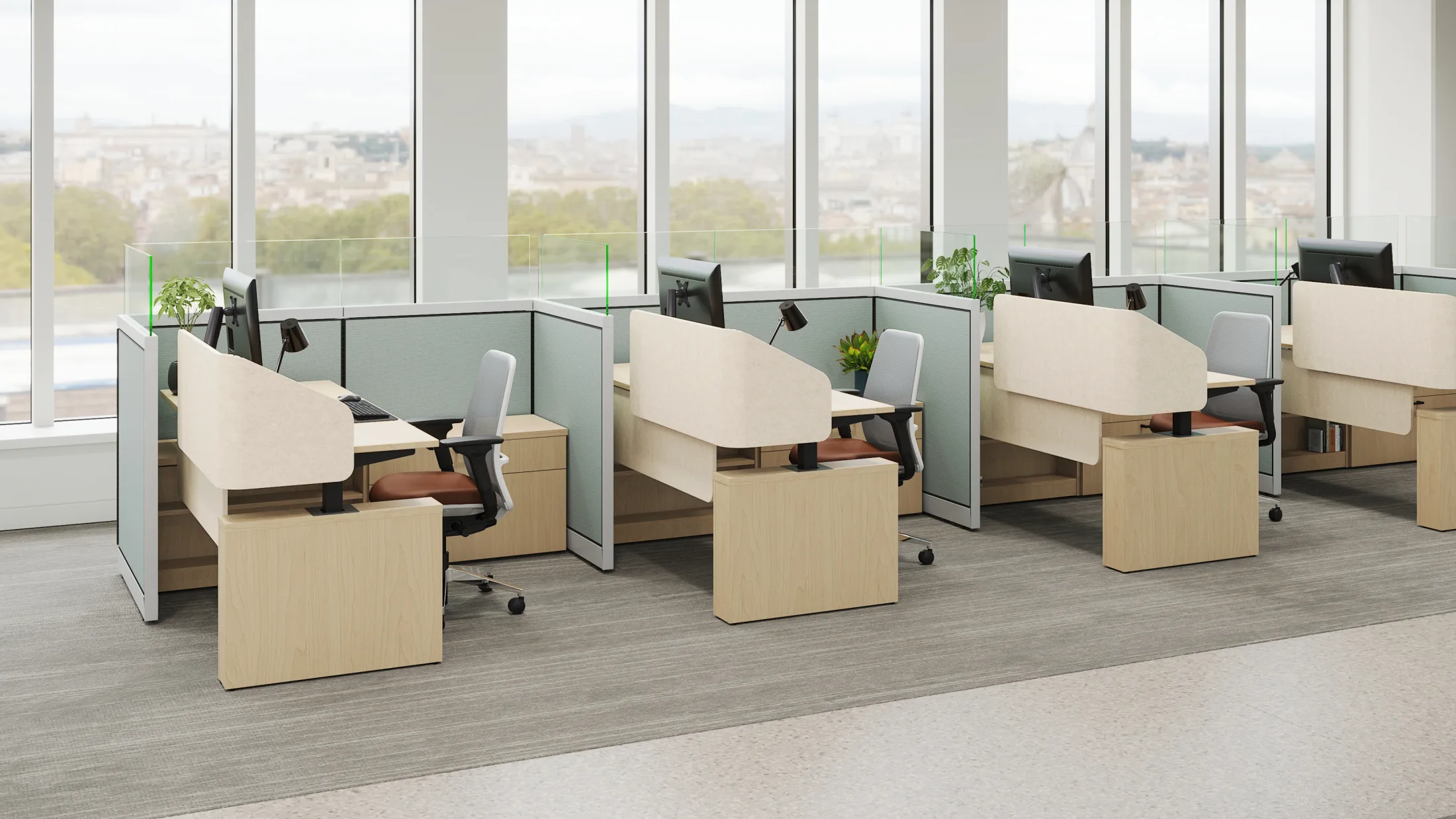
Integrated storage gives everyday items a home within the workstation—freeing desk space and reducing awkward reaches to a separate cabinet or pedestal.
A Smarter Way to Work
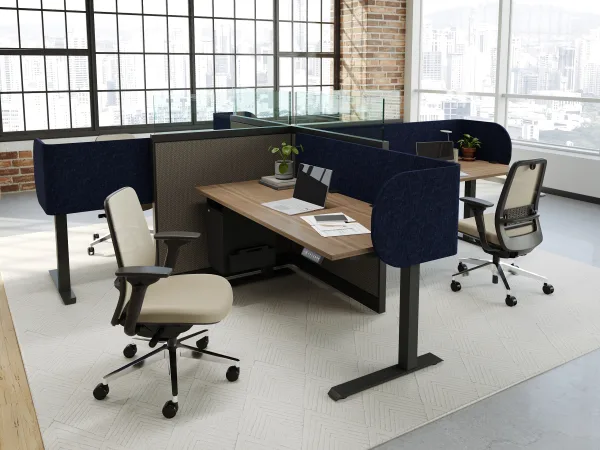
Embank Integrated Storage builds storage and cable management into the workstation. Paired with AMQ height-adjustable desks, it keeps essentials close without getting in the way of sit-to-stand movement.
- More storage, without adding more footprint.
- Cleaner cables and less visual clutter.
- Easy access to the things that keep work moving.
- A polished, furniture-inspired look at an approachable value.
It is a workstation designed for more than movement. It gives the rest of the workday a better place to happen.
The Missing Piece, Found
A better ergonomic workstation does more than adjust up and down. It puts movement, focus, and organization within easy reach.
Because when everything has a place, work feels a little easier.
That is the missing piece of workplace ergonomics.
Sources
1. McMains, S. and Kastner, S. “Interactions of Top-Down and Bottom-Up Mechanisms in Human Visual Cortex.” Journal of Neuroscience, 2011. Referenced in workplace organization summaries discussing competing visual stimuli. https://www.jneurosci.org/content/31/2/587
2. McKinsey research cited in workplace information-management reporting: employees spend an average of 1.8 hours per day searching for and gathering information. https://www.crownrms.com/insights/your-employees-are-spending-hours-looking-for-documents-why/